Where Development Capital Goes Wrong in Africa

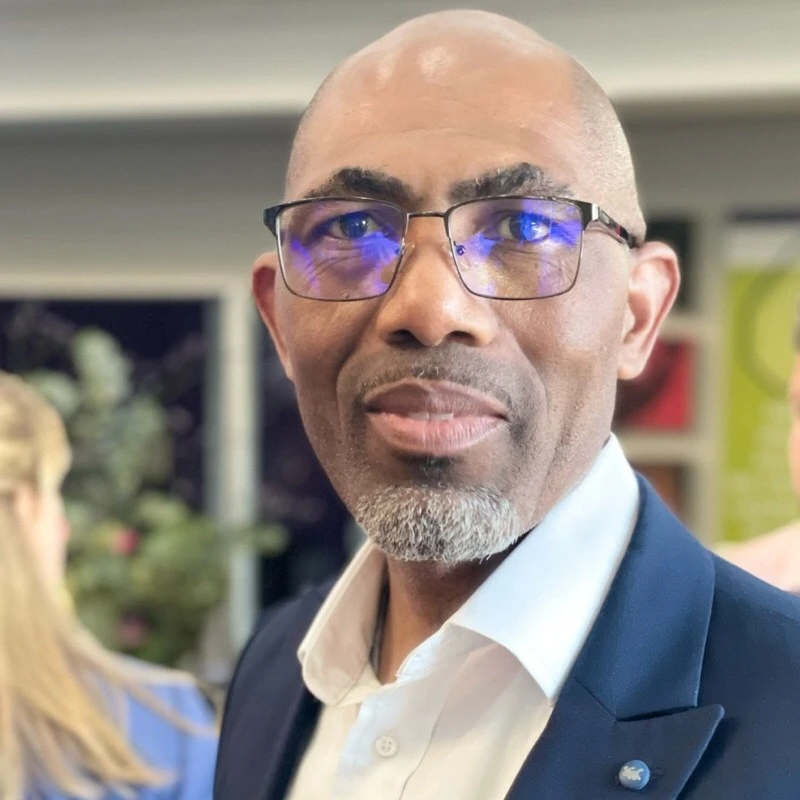
Haile Mekonnen
Development capital underperforms in Africa not because of a lack of funding, but because of structural gaps: poor risk sharing, weak local currency solutions, ESG frameworks that don't match ground realities, and local expertise that is brought in too late to shape how capital is deployed.
Every year, development finance institutions and investors commit billions to African markets. The models look clean. The structures look bankable. Then the money lands, and reality looks different.
Haile Mekonnen has spent his career at that intersection, working in blended finance, ESG, and development partnerships across Ethiopia and the wider region. We asked him to share what he sees on the ground that most people designing these facilities never see.
What is the biggest misconception investors and DFIs have about structuring blended finance deals in Ethiopia and the region?
The biggest misconception is that blended finance is primarily a pricing problem. If the concessional rate is attractive enough, the thinking goes, the deal will work. In practice, the real challenge is rarely the cost of capital alone. It is the structure around risk, local capacity, currency exposure, project readiness, data quality, and the ability of local institutions to originate, monitor, and manage the facility over time.
A facility may look bankable in a model prepared outside the country, but once it reaches the local market, issues like collateral, foreign currency risk, regulatory requirements, and borrower readiness become decisive.
Blended finance should not be designed as concessional money looking for absorption. It should be structured as a partnership that solves a clearly defined market constraint. The most effective structures combine affordable capital with technical assistance, risk sharing, local currency solutions, realistic ESG requirements, and implementation support for both financial institutions and end borrowers. Without that, concessional capital either remains underutilized or reaches only the safest clients, rather than unlocking finance for SMEs, agriculture, women-led businesses, and climate adaptation.
Where do most ESG frameworks fail when applied to projects on the ground?
Most ESG frameworks fail when they are treated as compliance templates rather than practical management tools. Many are technically strong, but written in a language and level of complexity that does not match the operating realities of local businesses, SMEs, cooperatives, or agricultural value chains.
On paper, a framework may ask for grievance mechanisms, environmental permits, labor documentation, and climate risk data. On the ground, many clients are still formalizing basic record keeping, occupational health practices, and community engagement processes.
The failure is not that ESG is irrelevant. The failure is that it is applied without enough localization, sequencing, or capacity building. A strong ESG framework should help a project improve over time, not exclude clients because they are not yet perfect. ESG works best when it is risk-based, proportionate, sector-specific, and supported by training, site visits, and practical monitoring.
Decision making for many of these projects happens far from where they are implemented. What role does local expertise actually play once the money lands?
Local expertise is what converts development capital from an international commitment into real economic and social impact. Local institutions understand the borrower base, market behavior, regulatory environment, informal risks, cultural context, and the practical capacity of end users. We know which sectors can absorb capital, which clients need technical support before financing, and which assumptions in a deal structure will not survive contact with reality.
The problem is that local expertise is almost always brought in too late, usually after the strategy, eligibility criteria, and risk structure have already been designed. Local banks, ESG practitioners, SME specialists, and community-facing institutions should be involved at the design stage, not only at the implementation stage.
Too often, the people closest to the market are asked to execute decisions they did not shape. When local expertise is included early, blended finance facilities become more realistic, more inclusive, and more effective.
If you could change one thing about how development capital is deployed in Africa, what would it be?
I would change how success is measured. Too often, success is defined by the amount committed or disbursed, rather than by the quality, additionality, and sustainability of the outcomes created.
Africa does not only need more capital. It needs better structured capital that is patient, catalytic, locally relevant, and aligned with national development priorities. Financing climate-smart agriculture, SME growth, women-led enterprises, and rural financial inclusion requires more than a credit line.
It requires technical assistance, guarantees, digital infrastructure, ESG capacity, and incentives that allow local institutions to reach clients who are commercially promising but still underserved. Development capital needs to move from a transaction mindset to a system-building mindset.
How do you see the role of local institutions evolving in shaping Africa's development agenda?
Local institutions will increasingly move from being implementers of externally designed programs to being co-architects of Africa's development agenda. Banks, regulators, fintechs, cooperatives, universities, and local advisory firms are becoming central to how climate finance, ESG integration, financial inclusion, and private sector development are delivered.
Africa's development priorities cannot be shaped only through external frameworks. Local institutions understand the trade-offs between growth, inclusion, resilience, and affordability. In the coming years, I believe they will play a stronger role in originating green finance opportunities, issuing sustainable finance instruments, mobilizing domestic capital, and holding development partners accountable to local realities.
Looking back on your career, what lesson about development finance took you the longest to learn?
That development finance is not only about mobilizing money. It is about building the systems that allow money to create lasting value. Early in my career, I thought access to funding was the main barrier. Over time, I learned that funding alone does not solve the problem if institutions are not ready, clients are not prepared, and risks are not properly shared.
The most important element is alignment: between the funder's objectives, the local institution's strategy, the client's real needs, and the country's development priorities. When that alignment is missing, even large facilities underperform. When it is present, even a smaller facility can become transformational. Development finance works best when it is patient, disciplined, locally grounded, and designed to strengthen institutions, not only to complete transactions.
"The future of development finance in Africa depends on a more balanced partnership: global capital, local institutions, practical ESG systems, and communities treated not only as beneficiaries but as active participants in shaping outcomes. This is where blended finance can become truly catalytic" Haile Mekonnen.
Haile Mekonnen is a blended finance and ESG expert based in Ethiopia. This conversation was conducted by Hermela Admasu for The Afrorian Brief. These responses reflect Haile's personal professional insights and do not represent the official position of Wegagen Bank S.C.
More Expert Insights